Attic Ventilation
Proper attic ventilation is essential. It prevents condensation and dry rot within the attic wood structure and wood substrates, prevents mould, and prevents warping of the plywood. Proper venting also extends the life of the shingles and roof membranes. Provide ventilation in a ratio of approximately 1:300 of the insulated attic area. Ideally air should enter the vented soffit, rise as heated in the attic, and exit near the peak of the roof.
Some people incorrectly believe that ventilation is only to keep the attic cool on hot summer days, and have even been seen to close their roof vents off for the winter. Nothing can be further from the truth. One should vent the roof at all times of the year, day and night, in order to keep the attic temperature as close as possible to the outside temperature. Most importantly, the ventilation is absolutely necessary to prevent winter ice damming problems on sloped roofs. Please see section on Snow & Ice on Sloped Roofs for a full explanation.
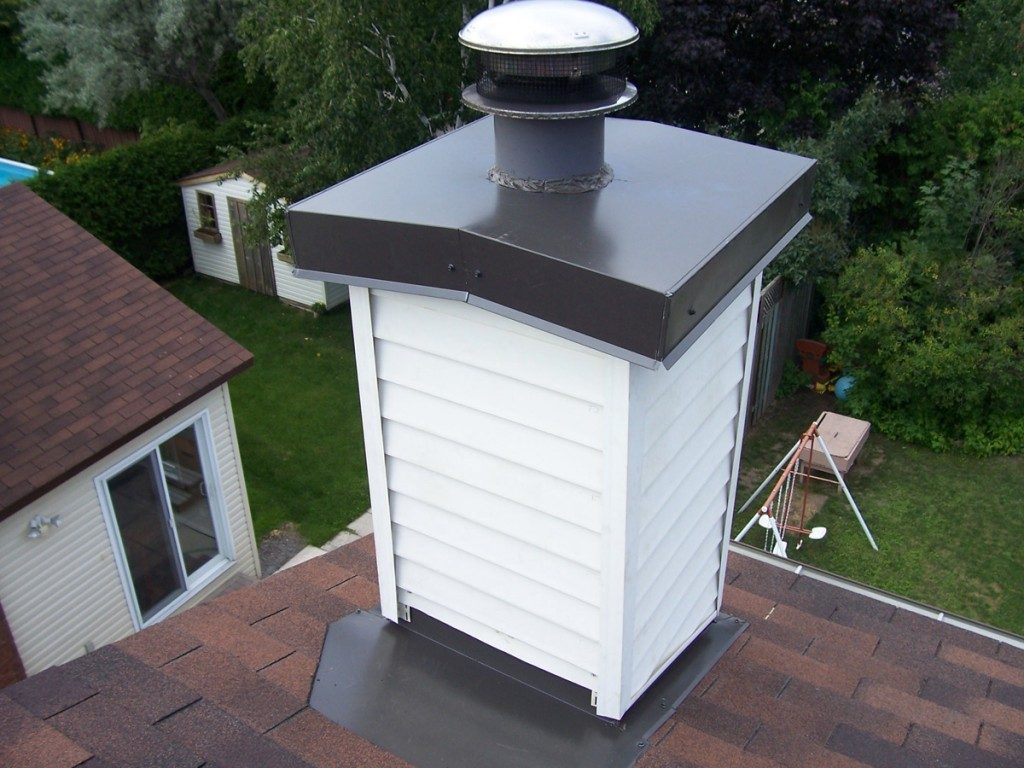
Mushroom vents are the most common and inexpensive but they do tend to get covered over with snow for prolonged periods in the wintertime until the heat in the attic melts the snow around them. Increasingly, manufacturers have switched to plastic vents, which are quite durable, except where squirrels, raccoons and other attic invasive animals are a problem. Aluminum mushroom vents fair only slightly better against the animals. Aluminum mushroom vents get easily dented by hail, but will still serve their function, though a little less attractive.
Maxi-vents are now the most commonly used vent upgrade in the eastern Ontario region. They are mounted on boxes that are several inches off the roof surface and are highly efficient vents. They rarely get covered with snow and vent 3-4 times better than mushroom vents. They don’t have any moving parts like the old turbine vents used to have that eventually wore out and squeaked. Maxi-vents are very sturdy, animal proof, and highly recommended by Rooftek and Roofmaster, both in sloped shingle and flat roofing applications.
Ridge vents are excellent for certain applications like cathedral ceilings, low slopes, and metal roofs. We use custom-made steel ridge vents with steel end caps for greater strength and more colour choice. We do not recommend aluminum ridge vents as they squish over time and then begin to leak. The most efficient ridge vents are the Max-Ridge vents which are used in special cathedral ceiling applications requiring a lot of ventilation. Some homeowners are sometimes surprised to see a bit of snow in their attics. Please note that all vents do take in a little powdery snow. Ridge vents are the most notorious for this because they take in snow as the wind sweeps it over the roof peak. However, despite the site of some powdery snow in the attic, this is usually harmless as it is in a small enough quantity and soon melts and evaporates.